

Navigating software development expenses requires recognizing that a fixed price tag rarely reflects technical reality. For CEOs, founders, and business leaders, evaluating SaaS application development cost involves analyzing application architecture, system complexity, third-party dependencies, team selection, and ongoing operational maintenance.
Partnering with an experienced SaaS development company Dubai, UAE allows organizations to convert ambitious software visions into scalable platforms while keeping expenditure predictable. This comprehensive guide breaks down every core variable affecting your investment, highlights key industry insights, and provides actionable cost optimization strategies.
1. Scope of the Project: Tool vs. Platform
The initial architectural decision defines the baseline budget. A fundamental cost distinction lies in whether you are building a focused SaaS tool or a multi-faceted SaaS platform.
SaaS Tool: Features a focused, targeted scope designed to perform specific critical functions. Because the workflow is contained, the overall cost of building a SaaS application remains lower.
SaaS Platform: Features a broad, evolving scope where multiple interconnected functional modules solve disparate business challenges. Platforms require deep architectural planning, dynamic databases, and expanded testing, driving up total development hours.
2. Targeted Platform: Web vs. Mobile Applications
Finalizing the platform where end-users access your SaaS application directly influences UI/UX engineering, backend architecture, and testing effort.
- Web Application: Ideal for desktop-heavy, enterprise-focused products (e.g., analytics dashboards, project management platforms). Developing a web-first application allows for rapid deployment and streamlined updates.
- Mobile Application (iOS/Android): Essential when target users require on-the-go access or hardware integration (GPS, camera, push notifications). Building native mobile apps across multiple operating systems increases design and development effort compared to a single responsive web interface.
- Cross-Platform / Hybrid: Leveraging frameworks like React Native or Flutter allows businesses to target both web and mobile simultaneously while controlling initial engineering outlays.
3. Feature Complexity and Functional Requirements
Core feature requirements are primary drivers of engineering time and overall expense. Adding complex layers requires specialized talent and extended development timelines.
When evaluating SaaS development services Dubai, feature breakdown usually impacts costs in the following ways:
Standard Capabilities (Low to Mid Complexity)
- Basic user authentication (Email/Password, Google OAuth)
- Standard database CRUD (Create, Read, Update, Delete) operations
- Basic subscription management via payment gateways
Advanced Capabilities (High Complexity)
- Security & Compliance: Multi-tenant data isolation, Role-Based Access Control (RBAC), end-to-end data encryption, and compliance controls (GDPR, HIPAA, SOC 2).
- Custom Analytics: Real-time data aggregation, automated custom reporting, and interactive chart visualization.
- Automation & AI: Predictive algorithms, workflow automation engines, or custom machine learning integrations.
4. Third-Party API Integrations
Modern SaaS platforms rely on robust API integrations to connect external tools, reducing the need to build every service from scratch. However, implementing, testing, and securing custom API connections demands dedicated software engineering time.
- Simple APIs: Basic authentication or public data feeds that require minimal mapping.
- Semi-Complex APIs: Transactional email services (SendGrid), SMS messaging gateways (Twilio), and standard regional payment gateways (Stripe, Checkout.com).
- Complex APIs: Deep integrations with legacy enterprise systems (SAP, Oracle, custom CRMs) or real-time payment synchronization requiring multi-stage error handling and high-throughput data pipelines.
5. Technology Stack & Scalability Architecture
Selecting an appropriate technology stack dictates both initial construction costs and future software scaling efficiency.
- Standard Open-Source Stacks: Utilizing widely adopted technologies (JavaScript/TypeScript, Python, PHP) offers a larger pool of qualified talent, keeping hourly engineering rates competitive.
- Specialized / Emerging Stacks: Integrating specialized technologies such as AI engines, blockchain modules, or complex data processing pipelines requires senior specialized developers who command higher compensation.
- Scalability Planning: Architectural choices made during early development determine how gracefully the product handles user growth. Designing for multi-tenancy and horizontal auto-scaling adds upfront investment but prevents costly structural rewrites down the line.
6. Team Structure and Delivery Resource Models
Who builds your SaaS application directly determines quality standards, communication speed, and budget allocation.
| Engagement Model | Typical Cost Level | Key Advantages | Primary Risk / Tradeoff |
| In-House Team | High | Maximum alignment, direct oversight, quick pivot capacity. | High fixed overhead (salaries, benefits, recruitment). |
| SaaS Partner Agency | Balanced | Complete cross-functional team, structured project management, predictable delivery. | Requires careful partner evaluation and clear contract terms. |
| Freelance Team | Low | Minimal initial expenditure. | Potential variable quality, communication delays, higher project management burden on clients. |
Partnering with a specialized SaaS product development agency Dubai provides access to established engineering workflows, domain expertise, and balanced project oversight.
7. Cost Estimation by Development Stage & Complexity
Understanding realistic market benchmarks allows business leaders to calculate total SaaS product development cost across lifecycle phases:
1. Minimum Viable Product (MVP)
Focuses strictly on validating primary customer pain points with essential functional features.
- Scope: Basic authentication, single billing tier, core workflow dashboard.
- Timeline: 2 – 3.5 Months.
2. Mid-Tier SaaS Application
Designed for businesses scaling past initial market validation into commercial adoption.
- Scope: Role-based permissions, advanced third-party API integrations, automated reporting, customizable user dashboards.
- Timeline: 4 – 7 Months.
3. Enterprise SaaS Platform
Built for large organizations or high-volume business operations.
- Scope: Complex multi-tenancy, custom AI/automation workflows, enterprise SSO, strict security compliance, high-availability cloud architecture.
- Timeline: 8 – 12+ Months.
9. Post-Deployment Operational Expenses
Software expenditure does not end once the application goes live. Sustainable budgeting requires accounting for ongoing operational costs, which generally equal 15% to 25% of original development expenses per year.
Cloud Infrastructure & Hosting: Database hosting, content delivery networks (CDNs), auto-scaling servers, and automated daily backups on platforms like AWS or Azure.
Code Maintenance & Updates: Routine software maintenance, library/dependency upgrades, security vulnerability patching, and bug fixing.
Third-Party API Consumption: Recurring usage fees for paid APIs (e.g., transactional email, SMS, specialized data processors).
Customer Support & DevOps: Ongoing server monitoring, continuous integration/continuous deployment (CI/CD) upkeep, and technical user support.
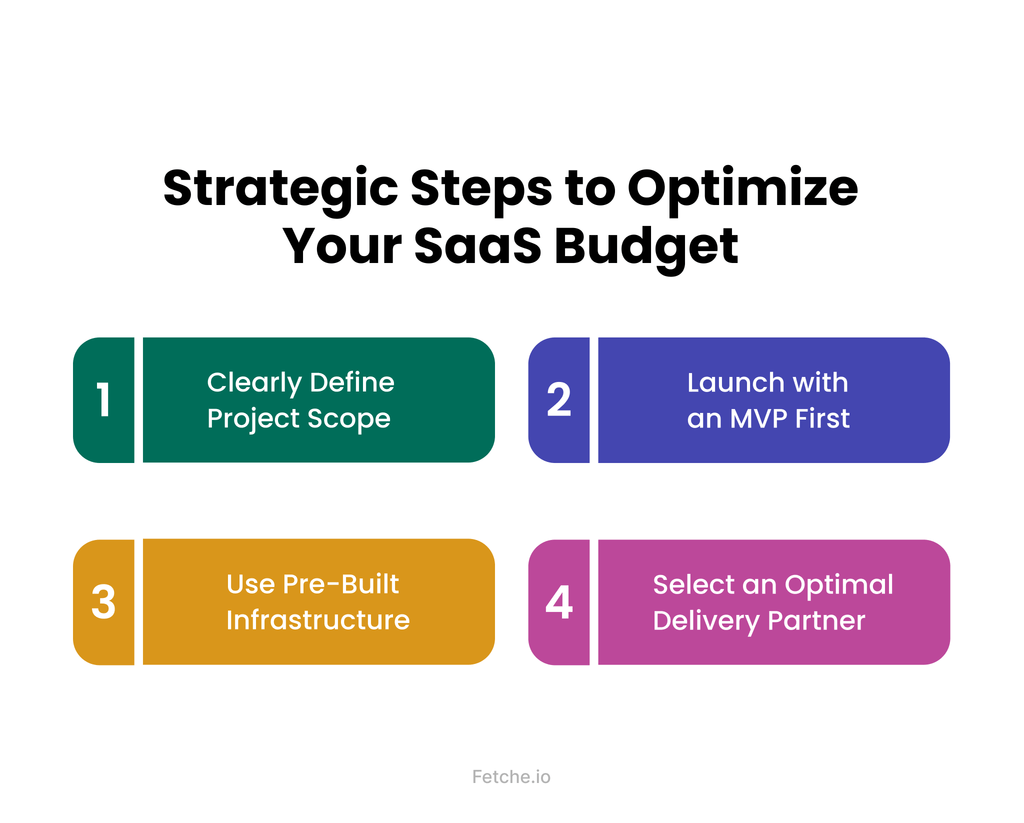
Strategic Steps to Optimize Your SaaS Budget
- Clearly Define Project Scope: Distinguish essential launch features from optional enhancements to avoid feature creep.
- Launch with an MVP First: Gather early market feedback before investing in advanced workflow automation or microservices.
- Use Pre-Built Infrastructure: Utilize established third-party services for universal functions like authentication and payment processing rather than building custom code from scratch.
- Select an Optimal Delivery Partner: Align with a qualified SaaS development company Dubai, UAE that balances engineering excellence with clear, milestone-driven pricing.
Build Your SaaS Product with Strategic Clarity
Calculating the cost of building a SaaS application involves balancing feature requirements, architectural goals, development models, and post-launch overhead. By prioritizing a focused MVP, selecting stable technology components, and accounting for ongoing maintenance, founders and executive leaders can launch high-performing SaaS products within predictable budget parameters.
Ready to estimate your software development budget? Contact our technical advisory team to discuss your SaaS roadmap and receive an itemized, milestone-based proposal tailored to your commercial goals.