

Artificial intelligence is reshaping how businesses operate across the UAE. From automating repetitive tasks to making intelligent decisions in real time, AI is helping organizations execute work faster than ever before. As Dubai continues to strengthen its position as a global hub for AI and digital transformation, companies across logistics, healthcare, finance, retail, and enterprise services are rethinking how they automate their operations.
Should your business continue using traditional rule-based automation, or is it time to adopt AI agents that can learn, reason, and make decisions autonomously? The answer depends on your business goals, operational complexity, and long-term digital strategy. While traditional automation remains valuable for repetitive processes, modern AI agents are enabling businesses to automate complex workflows, improve decision-making, and deliver greater business value.
In this guide, we’ll explore the differences between AI agents and traditional automation, where each approach works best, and how AI automation solutions in Dubai are helping businesses prepare for the future of intelligent operations.
Understanding Business Automation in 2026
Business automation has evolved significantly over the last two decades. What began as simple rule-based systems has now progressed into intelligent, autonomous technologies capable of understanding context, analyzing information, and taking action with minimal human intervention.
Today’s organizations are not simply automating repetitive work, they are transforming entire business processes. This evolution has been driven by advances in cloud computing, machine learning, large language models (LLMs), and generative AI.
The journey of business automation can be viewed in four stages:
- Manual Operations: Employees perform every task manually, resulting in slower processes, higher operational costs, and increased chances of human error.
- Traditional Automation: Businesses introduce software to automate repetitive, rule-based tasks such as invoice generation, payroll processing, or approval workflows.
- Intelligent Workflow Automation: Automation expands beyond repetitive tasks by incorporating AI capabilities such as document recognition, predictive analytics, and intelligent routing.
- Agentic AI: The latest stage introduces AI agents that can reason, plan, use tools, collaborate with other systems, and complete complex workflows with minimal supervision.
Unlike earlier automation technologies, agentic AI is designed to adapt to changing conditions, making it suitable for dynamic business environments where rules alone are not enough.
What is Traditional Automation
Traditional automation refers to software systems that execute predefined tasks based on fixed rules and workflows. These systems perform exceptionally well when processes are repetitive, structured, and predictable.
For example, an automation platform can generate invoices every month, send scheduled email notifications, or update inventory records whenever a sale is completed. The system follows programmed instructions and produces consistent results as long as the underlying rules remain unchanged.
Common Examples of Traditional Automation
- Payroll processing
- Invoice generation
- Employee onboarding workflows
- Data entry and synchronization
- Scheduled reporting
- Email notifications
- Document approvals
Advantages of Traditional Automation
Traditional automation remains an effective solution because it offers several practical benefits:
- Reduces repetitive manual work
- Improves operational efficiency
- Minimizes human errors
- Standardizes business processes
- Lowers operational costs
- Enables faster task completion
For organizations with well-defined workflows, traditional automation continues to deliver significant productivity gains.
Limitations of Traditional Automation
Despite its benefits, traditional automation has important limitations that become apparent as businesses grow and processes become more complex.
Because these systems rely on predefined rules, they cannot understand context or adapt to unexpected situations. Any process changes typically require manual updates, making them less suitable for rapidly evolving business environments.
Some common limitations include:
- Cannot make independent decisions
- Limited flexibility
- Struggles with unstructured data
- Requires frequent rule updates
- Unable to learn from previous interactions
- Depends heavily on human intervention for exceptions
As businesses increasingly deal with dynamic customer expectations and large volumes of data, these limitations are driving interest in more intelligent automation approaches.
What Are AI Agents?
AI agents represent the next generation of business automation. Rather than simply following predefined instructions, they are designed to understand objectives, reason through problems, make decisions, and execute tasks autonomously.
Powered by large language models (LLMs), machine learning, and advanced reasoning capabilities, AI agents can analyze information, interact with multiple software systems, and continuously improve based on new inputs.
Instead of asking, “What rule should I follow?”, an AI agent asks, “What is the best way to achieve this objective?”
This makes AI agents particularly valuable for workflows that require adaptability, decision-making, and collaboration across multiple systems.
Key Characteristics of AI Agents
Modern AI agents can:
- Understand natural language instructions
- Analyze structured and unstructured data
- Make contextual decisions
- Learn from interactions and feedback
- Use APIs and third-party tools
- Execute multi-step workflows autonomously
- Collaborate with other AI agents and software systems
This level of intelligence enables businesses to automate tasks that were previously impossible using traditional automation.
AI Agents vs AI Assistants
Although the terms are often used interchangeably, AI assistants and AI agents serve different purposes.
An AI assistant responds to user prompts and helps complete individual tasks, such as answering questions or generating content.
An AI agent goes a step further by independently planning, making decisions, interacting with external systems, and completing entire workflows with minimal human involvement.
For example:
- An AI assistant can draft an email.
- An AI agent can analyze customer data, generate the email, send it, schedule follow-ups, update the CRM, and notify the sales team automatically.
This shift toward autonomous execution is why many organizations are investing in AI agent development as part of their long-term digital transformation strategy.
AI Agents vs Traditional Automation
Although both technologies aim to improve efficiency, they solve different business challenges. Understanding these differences is essential when choosing the right automation strategy.
| Feature | Traditional Automation | AI Agents |
| Decision-Making | Rule-based | Context-aware and autonomous |
| Learning Capability | No | Continuously improves through AI models |
| Adaptability | Limited | High |
| Data Processing | Structured data only | Structured and unstructured data |
| Human Intervention | Required for exceptions | Minimal supervision |
| Workflow Complexity | Simple and repetitive | Dynamic and multi-step |
| Customer Interaction | Scripted responses | Intelligent conversations |
| Scalability | Moderate | Highly scalable |
| Best For | Payroll, reporting, approvals, repetitive processes | Customer support, logistics, sales, operations, product management |
| Long-Term Value | Operational efficiency | Operational efficiency + business intelligence + innovation |
Which One Should Your Business Choose?
There isn’t a one-size-fits-all answer. Traditional automation continues to deliver value for repetitive and predictable workflows, while AI agents are better suited for processes that require reasoning, adaptability, and intelligent decision-making.
For many organizations in the UAE, the most effective approach is not choosing one over the other—but combining both. Traditional automation can handle routine operational tasks, while AI agents manage complex workflows, customer interactions, and strategic decision-making.
As businesses continue investing in AI automation solutions in Dubai, this hybrid approach is becoming the foundation of modern, intelligent enterprises.
Why UAE Businesses Are Moving Toward AI Agents
The UAE has established itself as one of the world’s leading destinations for artificial intelligence and digital innovation. Through initiatives such as the UAE National Strategy for Artificial Intelligence 2031, Smart Dubai, and widespread investments in cloud technologies, businesses are increasingly embracing intelligent automation to remain competitive.
While traditional automation continues to streamline repetitive tasks, today’s organizations require systems that can adapt, analyze information, and make informed decisions in real time. This is where AI agents are creating a significant competitive advantage.
Across industries, businesses are adopting AI automation solutions in Dubai to improve operational efficiency, enhance customer experiences, and unlock new growth opportunities.
Here’s why AI agents are gaining momentum across the UAE:
- Government Support for AI: The UAE government is actively promoting AI and digital transformation, encouraging businesses to adopt intelligent technologies.
- Smarter Decision-Making: AI agents analyze large volumes of data quickly, helping businesses make faster and more informed decisions.
- Rising Customer Expectations: AI agents deliver personalized experiences, faster support, and 24/7 customer service.
- Improved Operational Efficiency: AI agents automate complex workflows, reduce manual effort, and help businesses scale more efficiently.
- Growing AI Adoption: More startups and enterprises in the UAE are investing in AI-powered automation to boost productivity and innovation.
Where Traditional Automation Still Works Best
Despite the rapid rise of AI agents, traditional automation remains an excellent solution for many business processes. If a workflow follows clear rules, rarely changes, and doesn’t require human judgment, rule-based automation is often the most efficient and cost-effective option.
Businesses should continue using traditional automation for tasks that prioritize consistency, speed, and accuracy over decision-making.
Common use cases of traditional automation are:
- Payroll Processing
- Invoice Generation
- Employee Onboarding
- Scheduled Reports
- Inventory Updates
- Approval Workflows
For these repetitive activities, traditional automation continues to deliver measurable productivity improvements with minimal complexity.
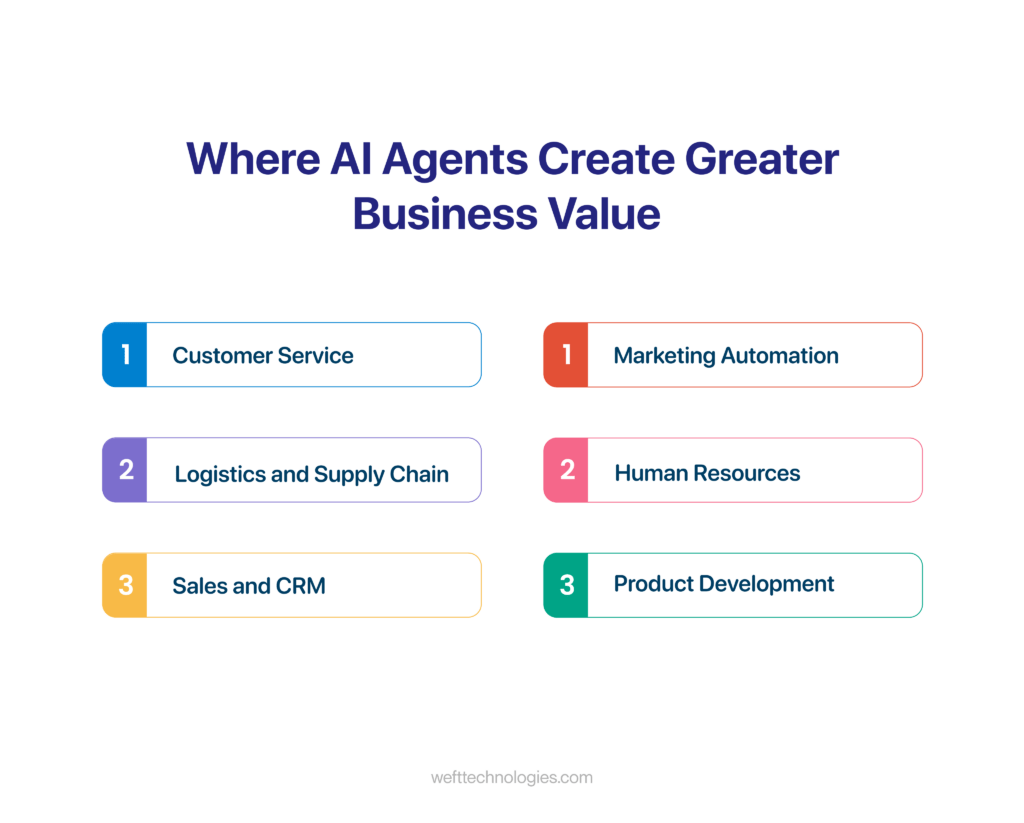
Where AI Agents Create Greater Business Value
- Customer Service
AI agents can understand customer intent, resolve common issues, retrieve information from multiple systems, and escalate complex cases when necessary. This results in faster resolutions and improved customer satisfaction.
- Logistics and Supply Chain
For businesses investing in AI automation for logistics in the UAE, AI agents can optimize delivery routes, predict demand fluctuations, monitor fleet performance, and proactively manage supply chain disruptions.
- Sales and CRM
AI agents can qualify leads, personalize follow-ups, update CRM records, recommend next-best actions, and help sales teams focus on high-value opportunities.
- Marketing Automation
Instead of simply scheduling campaigns, AI agents can analyze customer behavior, recommend content, optimize campaign performance, and personalize messaging for different audience segments.
- Human Resources
AI agents assist HR teams by screening resumes, scheduling interviews, answering employee queries, and automating onboarding processes while providing valuable workforce insights.
- Product Development
Product teams can leverage AI agents to analyze user feedback, prioritize feature requests, identify product improvements, and generate actionable insights based on customer data.
Across industries, AI agents for business UAE are helping organizations move from task automation to intelligent business optimization.
How to Build an Effective AI Automation Strategy
Implementing AI successfully requires more than adopting the latest technology. Businesses need a clear strategy that aligns AI initiatives with organizational goals, operational requirements, and customer needs.
A structured approach helps maximize return on investment while minimizing implementation risks.
1. Identify High-Impact Opportunities
Start by evaluating existing business processes and identifying repetitive, time-consuming, or decision-intensive tasks that could benefit from intelligent automation.
2. Define Clear Business Objectives
Determine what success looks like. Whether the goal is reducing operational costs, improving customer satisfaction, increasing productivity, or accelerating product development, measurable objectives should guide every AI initiative.
3. Choose the Right Automation Approach
Not every workflow requires an AI agent. Simple, repetitive tasks may be better suited to traditional automation, while complex workflows involving reasoning and adaptability are ideal candidates for AI agents.
4. Build a Strong Data Foundation
AI systems rely on high-quality data. Ensuring accurate, secure, and well-organized data improves AI performance and supports better decision-making.
5. Start with a Pilot Project
Rather than automating everything at once, begin with a focused pilot project. This allows businesses to validate results, measure impact, and refine the implementation before scaling across the organization.
6. Establish AI Governance
Develop clear policies around data privacy, security, ethical AI usage, and human oversight. Governance ensures AI systems remain trustworthy, compliant, and aligned with business objectives.
7. Measure, Learn, and Improve
AI is not a one-time implementation. Continuously monitor performance, gather user feedback, analyze outcomes, and optimize workflows to maximize long-term value.
A well-planned AI automation strategy enables businesses to move beyond simple task automation and build intelligent systems that continuously improve operations, empower employees, and create lasting competitive advantages.
Challenges of AI Agent Adoption and How to Overcome Them
| Challenge | Solution |
| Poor Data Quality | Keep your data clean, accurate, and regularly updated to improve AI performance. |
| Legacy System Integration | Work with an experienced AI development company in Dubai to integrate AI with your existing software and business systems. |
| Security & Privacy Risks | Protect sensitive data using encryption, secure cloud infrastructure, access controls, and compliance best practices. |
| Lack of AI Strategy | Define clear business goals and create an AI automation strategy before implementing AI solutions. |
| Employee Resistance | Train employees, involve them in the adoption process, and position AI as a tool that supports, not replaces, their work. |
| Measuring ROI | Track key metrics such as productivity, cost savings, customer satisfaction, and business outcomes to evaluate AI success. |
How to Choose the Right AI Development Company in Dubai
The success of an AI initiative depends not only on the technology but also on the expertise of the implementation partner. A reliable development company should understand your business objectives, recommend the right automation approach, and build solutions that can scale as your organization grows.
Before selecting a technology partner, consider the following factors:
Product Engineering Expertise
Look for a company that goes beyond software development and understands product strategy, user experience, scalability, and long-term business value.
Experience with AI Agents
Not every software company specializes in AI agent development. Choose a partner with proven expertise in building intelligent systems using large language models (LLMs), machine learning, and agentic AI frameworks.
Industry Knowledge
Experience in industries such as logistics, healthcare, fintech, manufacturing, or enterprise operations helps ensure faster implementation and better business outcomes.
Cloud and Integration Capabilities
AI agents often need to connect with CRMs, ERPs, payment systems, analytics platforms, and cloud infrastructure. Your development partner should have strong expertise in cloud-native architectures and API integrations.
Security and Compliance
Ensure the company follows secure development practices and understands UAE compliance requirements, data governance, and cybersecurity standards.
Long-Term Support
AI products require continuous monitoring, optimization, and updates. Choose a partner that provides ongoing maintenance, performance improvements, and strategic support after deployment.
Working with an experienced AI development company in Dubai helps reduce implementation risks and ensures your automation investments deliver measurable business value.
Why Weft is Your Trusted AI & Product Engineering Partner in UAE
Artificial intelligence delivers the greatest value when it’s combined with thoughtful product engineering, user-centric design, and a clear business strategy. At Weft, we help businesses move beyond isolated AI implementations to build intelligent digital products that solve real business challenges and create lasting competitive advantages.
As a leading product engineering company in the UAE, Weft combines deep expertise in AI, cloud technologies, and digital product development to help startups, enterprises, and growing businesses accelerate innovation.
Our AI Capabilities Include:
- AI strategy and consulting
- Custom AI application development
- AI agent development
- Generative AI solutions
- AI workflow automation
- Intelligent business process automation
- AI-powered product engineering
- LLM integration and implementation
- Enterprise AI solutions
- Cloud-native application development
Why Businesses Choose Weft
- AI-first approach to product development
- End-to-end product engineering expertise
- Scalable cloud-native architectures
- Human-centered UI/UX design
- Agile development methodology
- Strong focus on security, scalability, and performance
- Long-term technology partnership
Whether you’re modernizing internal operations, building intelligent enterprise software, or launching an AI-native digital product, Weft helps transform innovative ideas into scalable, future-ready solutions.
Successful AI adoption requires more than implementing the latest technology. It demands a clear strategy, high-quality data, strong governance, and a trusted technology partner who understands both business objectives and product engineering.
At Weft UAE, we help businesses turn AI into measurable business outcomes. From AI strategy and AI agent development to intelligent workflow automation and end-to-end product engineering, we build AI-first solutions that are scalable, secure, and designed for long-term growth.
Ready to transform your business with intelligent automation?
Partner with Weft UAE to build AI-powered products, automate complex workflows, and accelerate your digital transformation with confidence. Get in touch with our team today and discover how the right AI strategy can drive your business forward.